
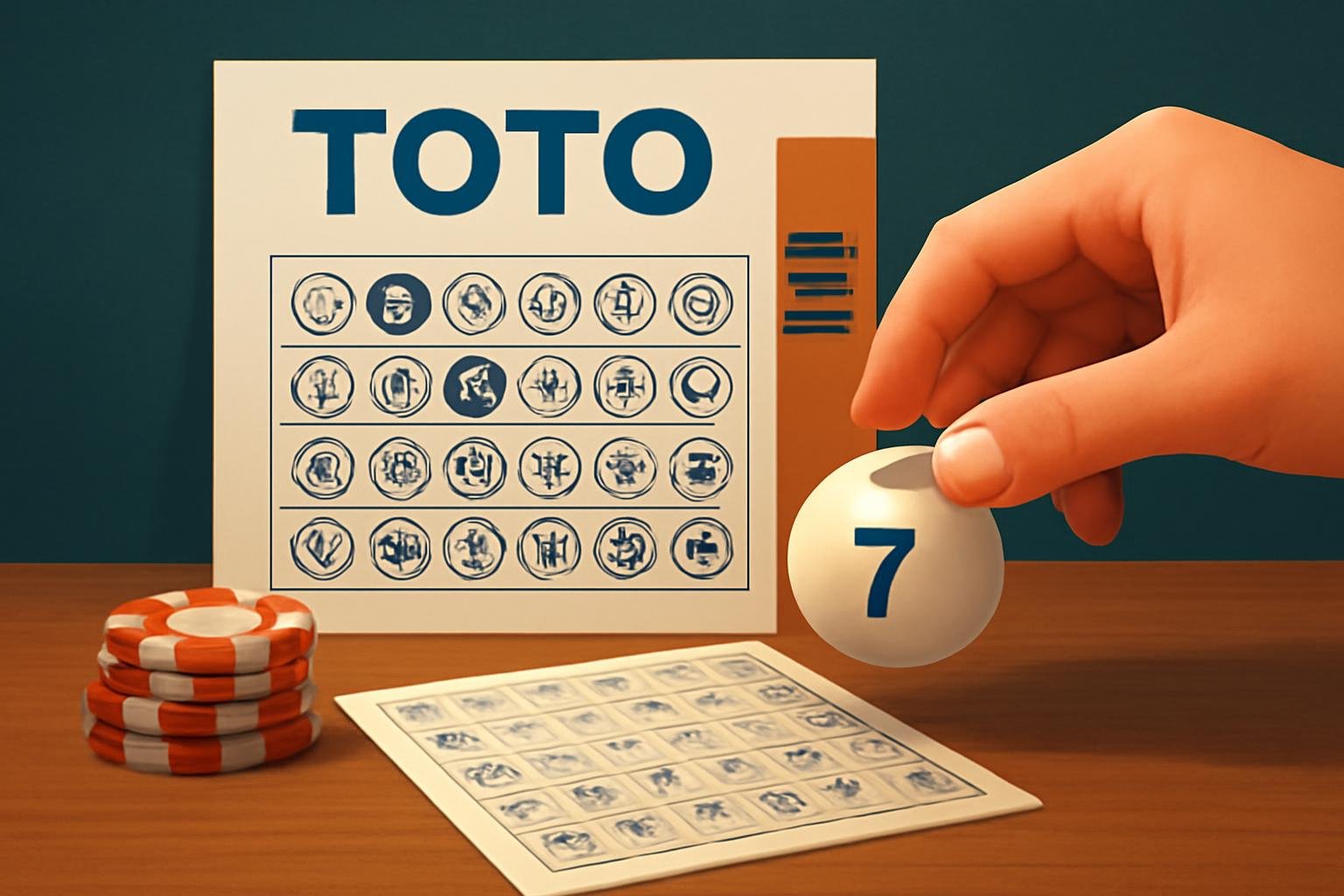
The name TOTO is short, but the structure of an example still needs to be stated. Singapore TOTO has ordinary six-number selections and system structures that represent several basic combinations. The Additional Number belongs to the draw result rather than to an ordinary seventh player-selected field.
A toto (singapore) number generator should identify six distinct main values from 1 to 49 for an ordinary line. If it offers a larger system or fixed-number demonstration, it should explain how that output expands into six-number component lines. This is more informative than showing a larger pool with no account of what its values represent.
Confirm Singapore and the matrix
Similar-looking lottery names occur in different countries. The word TOTO alone should not replace the country and six-from-49 format. A generator supporting several products needs to show its active preset clearly so a reader does not interpret a valid example under the wrong rules.
The selected count and field limits should be stated directly. A few small values on a screen cannot establish the full range used by the tool. An explicit description makes the intended task inspectable before any examples are saved or copied.
An ordinary line contains six distinct values
The main set is unordered. Sorting makes comparison easier without changing the selected combination. A different arrangement of the same six members should not be counted as another unique main line.
All six values must be within the field and different from one another. Removing a repeated value without replacement can leave an incomplete line. The generator should complete the selection process before presenting the output as a valid ordinary example.
Systems represent component combinations
A larger selected pool can represent several six-number subsets under the relevant accepted product rules. Seven values contain seven basic subsets, while eight contain 28. The visible selected count is therefore not the same thing as the number of basic lines represented.
A clear tool labels the intended structure and explains the expansion. If the output is only a candidate pool for an educational exercise, say so rather than implying it is already an accepted system entry. Current permitted structures, participation and costs belong to the official conditions.
A fixed-value exercise illustrates another structure
Consider an abstract collection holding five values fixed and pairing them with each of the 44 other values in the 49-number field. It contains 44 different six-number combinations. Every component shares the five fixed values and differs in its sixth member.
This demonstrates the mathematics of a fixed-number sweep without making the fixed values stronger or predicting the result. A generator illustrating such a structure should preserve the fixed pool and varying pool labels. Flattening everything into one list would erase the information needed to reconstruct the component lines.
Additional Number belongs to the result
A TOTO result includes the six main values and an Additional Number used in specified lower categories. It is not a seventh selected value in an ordinary six-number line. A page may illustrate a hypothetical result, but it should keep it separate from the selected combination or system structure.
For practice, count main matches first, then check the Additional Number condition where required. Do not replace an originally selected value after seeing the result. Preserve the selection so that the match summary can be checked transparently.
Export enough information to interpret the example
A useful record includes the game name, format and whether the values describe an ordinary line, a system or a hypothetical result. Additional Number information and fixed-value labels need explicit fields rather than colour alone. Plain-text and printed copies should preserve their meaning.
An export test can preserve two different example structures. One record contains six ordinary selected values. Another records five fixed values and states that the sixth ranges across the remaining field. The second record cannot be reduced to six unexplained digits without losing its meaning. It represents a collection rather than one component. A tool illustrating it should provide enough information for another reader to reconstruct that collection and distinguish it from an accepted official product.
The same principle applies to a result record: the Additional Number needs a result label rather than a fixed-selection label. A useful teaching exercise asks the reader to classify every displayed value by role before counting matches. That check prevents a flattened visual layout from silently changing the mathematical object under discussion.
For actual participation, the authorized accepted record establishes the selected structure and draw context. A generator cannot prove a purchase merely by producing valid values. Its useful contribution is clear, correctly structured examples that make ordinary lines, systems and drawn additional information understandable without implying predictive power or official acceptance.